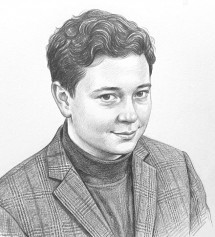
Last year, during the May holidays, a group of parishioners from the Church of Saint Alexander Nevsky at MGIMO University travelled to the Donetsk People's Republic. Our mission was to help restore churches damaged by the conflict.
I was incredibly excited about the trip. I imagined that something extraordinary would surely happen. After all, we were going to rebuild a ruined monastery. Surely, such a noble undertaking would be accompanied by a miracle!
Our group was led by our parish priest, Father Igor Fomin. When we arrived, we were joined by another team of volunteers, led by a Portuguese man named João Quaresma.
Our work was physically demanding but deeply rewarding. We cleared rubble, swept away dust, removed small stones and carefully recovered religious objects. Whenever we found icons or church vessels, we collected them and handed them over to the monks of a nearby monastery. Some days we worked from sunrise until sunset, taking our lunch breaks on the steps of a ruined church in the village of Nikolskoye.
Eventually, we made enough progress for people to enter the church freely and even hold services there. It was then that something unexpected happened.
João approached Father Igor with a personal request. He had once been an activist in the Portuguese Communist Party, but the sight of a church rising from the ruins had profoundly moved him. He had decided to become an Orthodox Christian and receive Baptism.
During the sacrament, he was given the Christian name John, with Saint John the Warrior chosen as his patron saint.
After the baptism, we returned to work. About an hour later, we discovered something remarkable: just a few metres from the place where the baptismal water had been poured, beneath a pile of rubble, lay an icon of Saint John the Warrior!
Naturally, we were astonished. We immediately gave the icon to our newly baptised friend. It seemed almost impossible to imagine a more beautiful coincidence. A Portuguese man had embraced Orthodoxy, taken the name John and received Saint John the Warrior as his heavenly patron — only for an icon of that very saint to appear in the ruins moments later.
Surely, this was a miracle!
That evening, we shared the story with Father John, a monk from the Holy Dormition St Nicholas-Vasilyevsky Monastery, where our group had been staying. However, his reaction was not what I expected. He remained perfectly calm and simply remarked that there was nothing particularly surprising about what had happened. After all, he himself had brought that icon to the church several months earlier.
I must admit that I was disappointed. In an instant, what had seemed like a beautiful miracle had become an ordinary coincidence. I even felt a little irritated. Why had the monk felt the need to spoil such a wonderful story? He could simply have shared our joy without revealing his own involvement.
Only later, after spending more time studying the Holy Scriptures and the traditions of the Church, did I begin to understand how mistaken my expectations had been.
I had been looking for a miracle in the wrong place.
My idea of a miracle was rather childish. I imagined something spectacular, something that would surprise everyone and provide undeniable evidence of divine intervention. I wanted to witness an extraordinary event, almost like a scene from a film.
But Christianity teaches us to look much deeper.
The real miracle of that journey was not the discovery of an icon. It was the transformation of a human heart. A former communist activist from Portugal had found his way to Orthodox Christianity. He had taken an important step towards salvation. The monks had received much-needed humanitarian assistance, and the damaged church had been restored to the point where, just a few weeks later, people from neighbouring villages could gather for a religious procession around it.
Was this not a miracle in itself?
A place that had been reduced to rubble was becoming a place of prayer once again. A community was recovering its spiritual home. People were coming together to rebuild what had been destroyed.
This, I realised, was a far greater miracle than finding an icon in the rubble.
It is easy to become fascinated by extraordinary signs and unusual coincidences. We want God to surprise us, to provide visible proof of His presence and to fulfil our expectations of what a miracle should look like. Yet this desire can distract us from the most important things happening around us.
Sometimes, we become so preoccupied with searching for something supernatural that we fail to recognise the extraordinary power of ordinary acts of faith, compassion and service.
A person changing their life, learning to love their neighbour, forgiving someone who has hurt them, or finding the strength to rebuild after tragedy — these transformations may not attract attention, but they are profoundly meaningful.
A miracle is not a spectacle arranged to satisfy our curiosity. It is a gift from God, received through faith and recognised by a heart that is open to Him.
We cannot demand miracles, nor should we become disappointed when God does not answer our expectations in the way we imagined. Our task is not to dictate how divine grace should appear, but to trust in God and work on ourselves.
Perhaps the greatest challenge for a Christian is learning to see the extraordinary in what seems ordinary: in a restored church, in a helping hand, in a stranger who becomes a brother in faith, and in a human heart that finds its way to God.
The miracle had been there all along. I simply had to learn how to recognise it.






-
The True Meaning of a Miracle
Anton Atroshenko
All Authors