The Holy Apostle Philip, one of the twelve closest disciples of Christ, was from Bethsaida of Galilee. He knew the Holy Scriptures well and awaited the coming of the Savior promised by the prophets. When the Lord said to him, "Follow me," Philip followed Him. This meeting determined the rest of his life (John 1:43-44).
Soon Philip found Nathanael and told him that he had met the One about whom Moses and the prophets had written. Nathanael doubted: how can a Savior come from Nazareth? Philip's answer was simple: "Go and see" (John 1:46). He invited Nathanael to see and hear Christ for himself. Bringing people to the Lord became the apostle's life's work.
The Gospel has preserved several episodes in which we meet Philip next to the Teacher. His question at the Last Supper is especially memorable.: "Oh my God! Show us the Father, and it is enough for us." In these words, one can hear a person's fervent desire to know God. The Savior replied to the disciple, "He who has seen me has seen the Father" (John 14:8-9). Thus, through Philip's question, the revelation of the unity of the Son and the Father sounded to all people.
After the Ascension of the Lord, Philip went to preach the Gospel. His path passed through Galilee, Greece, Syria and Asia Minor. According to the life, through the prayers of the apostle, healings were performed and the dead were resurrected. In the city of Azote, he healed the sore eyes of the daughter of Nicoclides, the man who received him in his house. Having seen the mercy of God, the owner of the house was baptized together with the whole family. In other places, the preacher was met with hostility. Philip and his sister Mariamne, who accompanied him, endured beatings, prisons and exile, continuing to bear witness to Christ.
Hierapolis of Phrygia became the last place of the apostle's earthly ministry. Mariamne and the Apostle Bartholomew preached with him here. Among the people who were healed by Philip's prayer was the wife of the city governor. She believed in Christ. The enraged ruler ordered the preachers to be seized, and then, at the instigation of pagan priests, Philip and Bartholomew were crucified.
An earthquake started during the execution. Suffering on the cross, Philip prayed for the salvation of the people who had betrayed him to torment. Until his last breath, he remained faithful to the gospel commandment of love for enemies. The witnesses believed in Christ and demanded that the apostles be removed from their crosses. Bartholomew was released while still alive and subsequently baptized believers. Philip died on the cross. His body was reverently buried by Sister Mariamne.
"Come and see" — these words of the apostle continue to be heard today. They contain an invitation to open the Gospel, come to the temple, and turn to God in prayer. Philip himself walked this path to the end, testifying his faith with preaching, mercy and love even for those who caused him suffering.
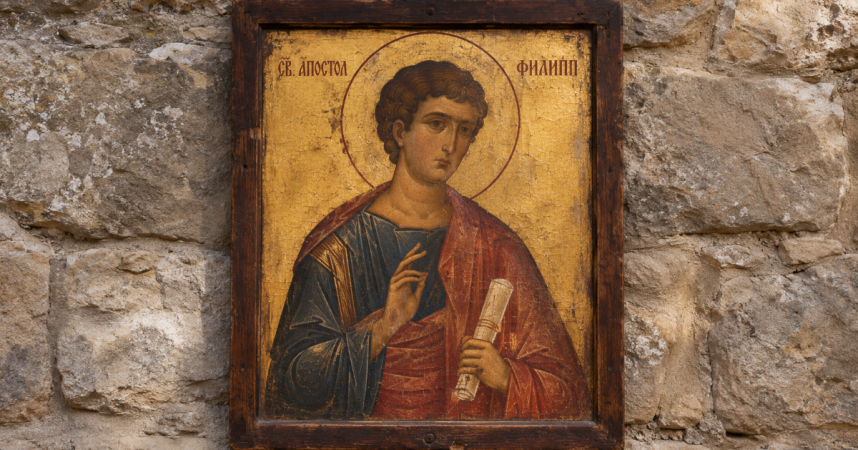
The Church honors St. Philip the Apostle
27.11.2026, 06:00







-
The True Meaning of a Miracle
Anton Atroshenko
All Authors