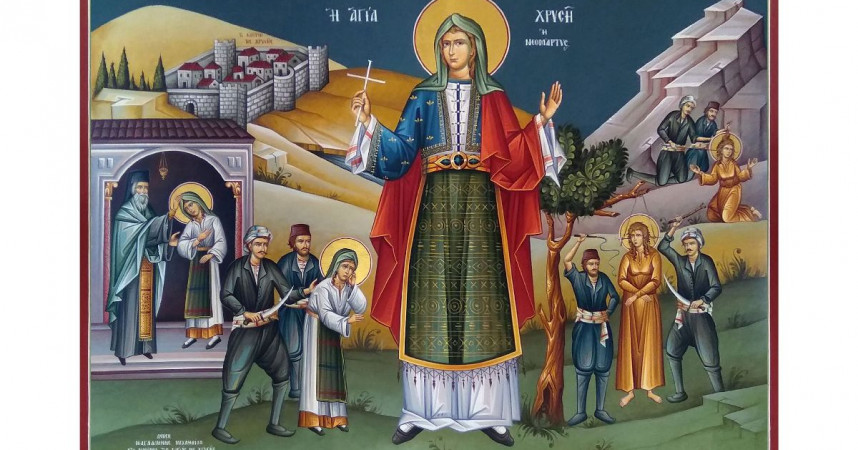
Remains believed by Greek Orthodox Church authorities to belong to New Martyr Zlata of Maglen, also known as Chrysa, have been discovered more than two centuries after her death, according to a report published on September 28, 2026, by Orthodoxia News Agency.
The bones were found near the ruins of the former Church of the Dormition of the Mother of God in the area of the Chrysi Castle, near the village of Chrysi in Greece’s Pella region. The site is associated with the life and death of Zlata, who is venerated by the Orthodox Church as a new martyr.
The remains were examined in specialized laboratories in Germany. According to the published findings, they belonged to a young woman estimated to have been about 17 years old at the time of death. Researchers reportedly dated her death to around 1795.
Church sources say the scientific findings are consistent with the traditional account of Zlata’s life. The remains also showed evidence of severe physical injuries, which church authorities associate with the torture described in her hagiography.
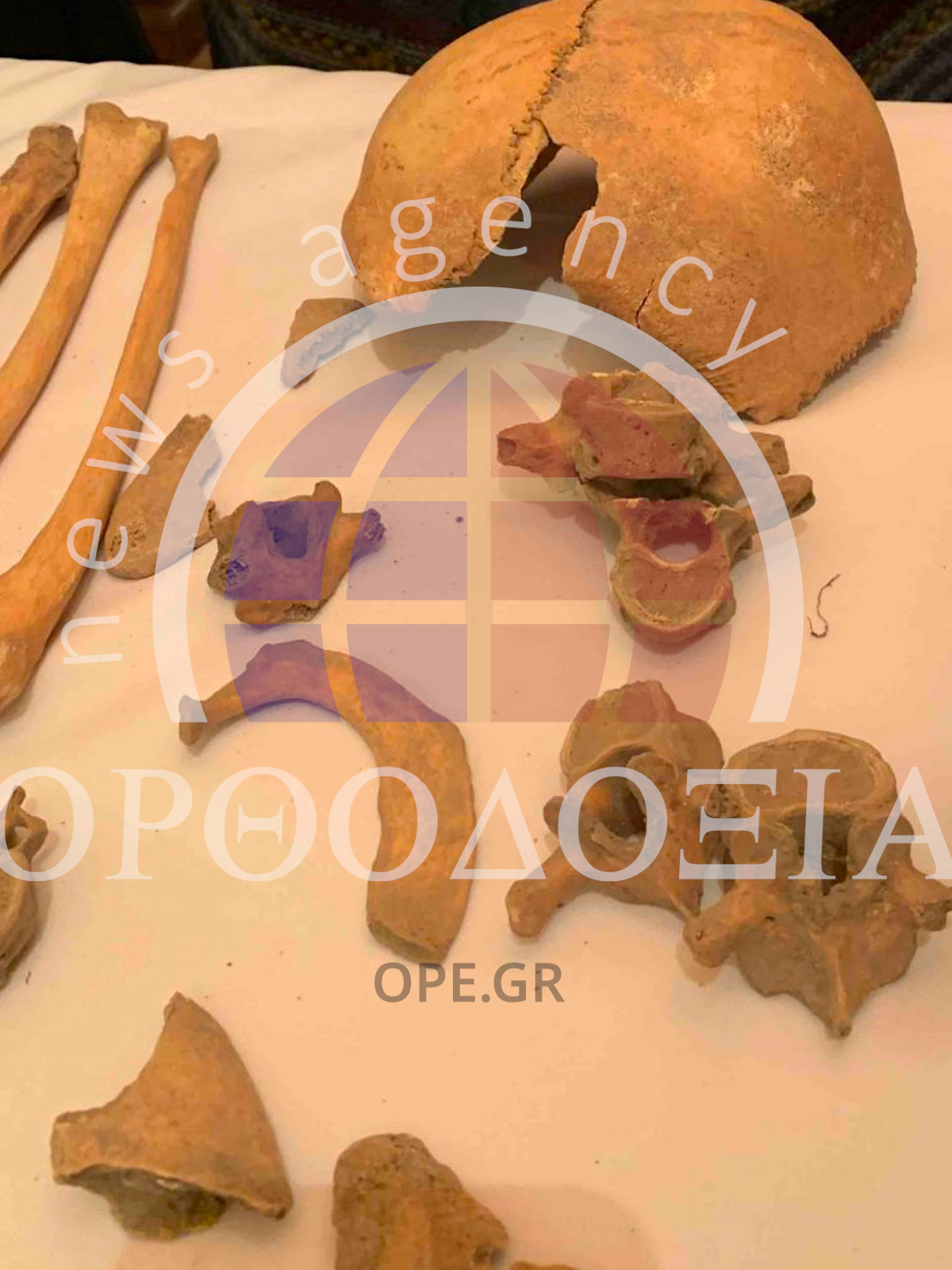
Photo: orthodoxianewsagency.gr
Zlata was born in the village of Slatena, now known as Chrysi, in the Almopia area. She came from a poor Christian family with four daughters. Her feast day is observed in the Orthodox Church on October 13.
According to her traditional biography, Zlata was abducted as a young woman by an Ottoman Turk who attempted to force her to convert to Islam and marry him. She refused to renounce Christianity. After attempts to persuade and threaten her failed, she was subjected to torture and died on October 13, 1795.
In Orthodox tradition, Zlata is honored as a new martyr who remained faithful to her Christian faith until her death.
The remains were transferred to specialists in Germany following their discovery near the ruins of the old church. The reported age of the woman and the estimated date of death were found to correspond closely with details preserved in the Church’s traditional account of Zlata.
Bishop Joel of Edessa, Pella and Almopia described the discovery as a “great grace” for the local Church. The relics are expected to be presented for veneration during celebrations marking Zlata’s feast on October 12–13.
For residents of Chrysi, the discovery has particular significance. If the identification is confirmed by the Church, the remains would represent the return to Zlata’s birthplace of relics associated with the young woman more than 200 years after her reported martyrdom.





-

The Strength of Weakness
Alexey Shirikov
All Authors