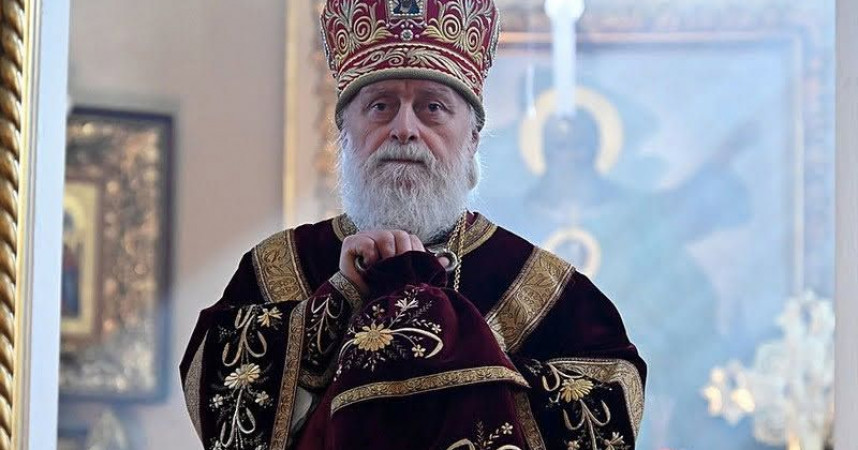
Estonia’s Supreme Court on November 17 declined to hear an appeal by Metropolitan Eugene (Reshetnikov), head of the Estonian Orthodox Church, challenging the authorities’ refusal to extend his residence permit. The decision leaves in force an earlier ruling upholding the legality of the Police and Border Guard Board’s actions, according to public broadcaster ERR.
In February 2024, the Estonian authorities refused to renew Metropolitan Eugene’s residence permit, citing an assessment by the Estonian Internal Security Service that his activities could pose a threat to national security.
Officials pointed to the metropolitan’s public statements and alleged connections, which they said indicated support for Russian policies and could contribute to divisions within Estonian society.
Metropolitan Eugene challenged the decision in court. However, the administrative court dismissed his claim, and on July 9, 2026, the district court upheld that ruling. The court concluded that the evidence, considered as a whole, demonstrated a potential threat to the country’s security.
Metropolitan Eugene became head of the Estonian Orthodox Church in the summer of 2018. After his residence permit expired in February 2024, he left Estonia. Since then, he has continued to oversee the diocese remotely, assisted by two auxiliary bishops: Bishop Daniel (Lepisk) of Tartu and Bishop Sergius (Telikh) of Maardu.
The latest court decision comes amid ongoing disputes over the status of Orthodox communities in Estonia.
In May 2024, the Estonian parliament declared the Moscow Patriarchate an organization supporting Russia’s actions in Ukraine. Authorities also sought to sever the ties between local Orthodox parishes and the Russian Orthodox Church.
In response to the changing circumstances, the Church changed its name to the Estonian Orthodox Christian Church (EOCC). However, tensions surrounding its legal and institutional status have continued.
Legislative changes have also affected the Pühtitsa Dormition Convent, one of Estonia’s best-known Orthodox monasteries.
In 2025, parliament passed amendments to the Churches and Congregations Act on several occasions, but President Alar Karis refused to promulgate them, citing potential conflicts with the Constitution. In June 2026, Estonia’s Supreme Court ruled that the legislation was consistent with the country’s Basic Law.
The dispute over Metropolitan Eugene’s residence permit is part of broader tensions between the Estonian authorities and Orthodox institutions with historical and ecclesiastical ties to the Moscow Patriarchate.








-

The Art of Noticing Another Person’s Pain
Anastasia Ivanova
All Authors