A large-scale scientific and theological conference "Spiritual Education in the twentieth Century" was held at the St. Petersburg Theological Academy (SPbDA) from October 19 to 20, 2026. The forum was timed to coincide with a landmark date — the 80th anniversary of the revival of the Leningrad Theological Academy, which reopened its doors in 1946 after decades of Soviet persecution.
The conference brought together leading church historians, theologians, teachers and students of secular and theological universities in the country.
Opening the meeting, Bishop Siluan of Peterhof, Rector of St. Petersburg Orthodox University, emphasized the importance of understanding the historical experience of the twentieth century for the development of modern spiritual education.
During the plenary session, key reports were devoted to turning points in the history of the academy.:
• The Era of the future Patriarch: Professor M.V. Shkarovsky presented unique archival data on the first years of leadership of Leningrad theological schools by Archimandrite (later Patriarch) Kirill in 1975-1978.
• Unique formats: Dean of the Faculty of Church Arts E.M. Gundyaeva highlighted the history of the opening of the famous Regency Department in 1978-1979, which became an innovative step for the Soviet period.
• Science in exile: Professor N.Y. Sukhova analyzed the educational and theological activities of graduates of the pre-revolutionary metropolitan Academy who found themselves in the Diaspora in the 1920s and 1960s.
The conference continued in the format of specialized sections and round tables, where participants removed unnecessary pathos and focused on specific historical and practical cases.
The profile discussions covered several key areas:
• The Soviet period and traditions: The speakers discussed in detail how the teaching of fundamental disciplines — dogmatics, patrology and moral theology - was structured in the face of ideological pressure, as well as how the courses of sectology and schismology developed.
• The Christian view of science: One of the most lively areas was the round table "Bioethics at the Theological Academy." Scientists and clergy (including practicing doctors) discussed the tasks of the new Center for Bioethical Research at St. Petersburg State University, touching upon the pressing issues of Orthodox bioethics in modern secular society and the problems of eco-bioethics.
• Culture and information: Separate sections were devoted to the fate of the regents and the development of church singing on the Neva River, as well as the evolution of church media - from the Soviet periodical press to modern Internet resources of the Academy within the framework of the information space round table.
The anniversary Forum at SPbDA showed that the Leningrad theological schools, revived 80 years ago, not only preserved the continuity of the pre—revolutionary tradition, but also formed a flexible intellectual environment capable of responding authoritatively to the most complex challenges of the time - from biomedicine to digital media.
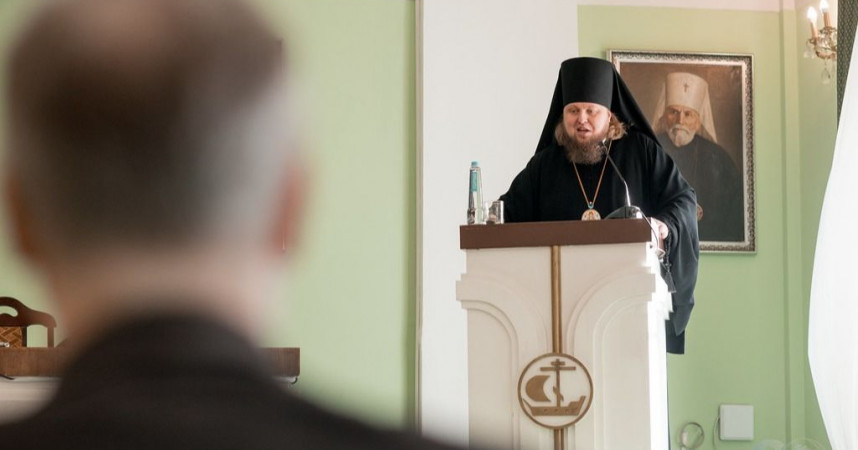
History lessons and modern challenges: 80 years of the revival of theological schools discussed in St. Petersburg
24.10.2026, 08:00





-
“I Praise You, Brothers”: The Spiritual Art of Recognizing the Good
Alexey Shirikov
All Authors