In a forest cave on the banks of the Ilmen River, there lived a man who cleared the land for arable land, sowed bread and ground grain. His food was scanty, the earth served as a bed, and prayer remained the main thing. From here began the path of St. Anthony of Leokhnov, an ascetic, whose labors grew the monastery, which became a spiritual home for many people.
The future saint was born around 1526 in a pious family of Tver boyar children of the Veniaminovs. From his youth, he aspired to devote himself to God. After leaving his parents' house, Anthony came to the Novgorod land and settled in the Rublevo tract. He dug a small cave among the forests and ravines. Here, in solitude, his days were spent in labor, fasting and prayerful standing before the Lord.
But the silence of the hermit did not remain hidden from people. Word of his life spread around the neighborhood, and people began to come to him for spiritual support. His life preserved the story of Monk Nifont, who was initially frightened by the harsh appearance of the exhausted ascetic. Anthony gently calmed the guest, shared a modest meal with him, and spent the day in conversation and common prayer.
Anthony himself was eager to take monastic vows. According to the testimony of his life, on the feast of the Ascension of the Lord, an Angel appeared to him and ordered him to go to Leokhnovo. There the ascetic met the monk Tarasia, who tonsured him, retaining his former name. Together they built a church in honor of the Transfiguration of the Lord. The brethren gradually gathered around him, and this is how the Leokhnov monastery arose.
For the monks, the monk became a mentor primarily through his own life. He was the first to arrive at the temple and the last to leave the divine service, performed heavy monastic work, baked bread, and cooked food for the brethren. His instructions were simple: to love God, follow the example of the holy fathers, work hard and keep peace among themselves. Over time, up to fifty monks gathered in the monastery.
The life of the monk also tells about the miraculous help to people. One day, he healed a young shepherd who had been bitten by a snake, and then reminded him of a complete lie: the young man sold a sheep to a poor widow, telling the mistress that it had been taken away by a wolf. The elder called on the shepherd to repent and return the stolen goods. In this way, the saint's concern for a person's physical health was combined with concern for his soul: repentance was supposed to bear fruit — the correction of the evil done.
The monk's last days were spent far from the monastery. During the Swedish invasion, the elderly ascetic moved to Novgorod at the call of the metropolitan. Here, having partaken of the Holy Mysteries of Christ and blessed the disciples, he peacefully departed to the Lord. Subsequently, his relics were transferred to Leokhnovo, and the ruined monastery was revived.
The memory of St. Anthony reminds us of faithfulness to God in our daily lives. Prayer, honest work, charity, and a willingness to correct one's mistakes remain available to everyone. These activities form a Christian life that can warm and support those who are nearby.
Reverend Father Anthony, pray to God for us!
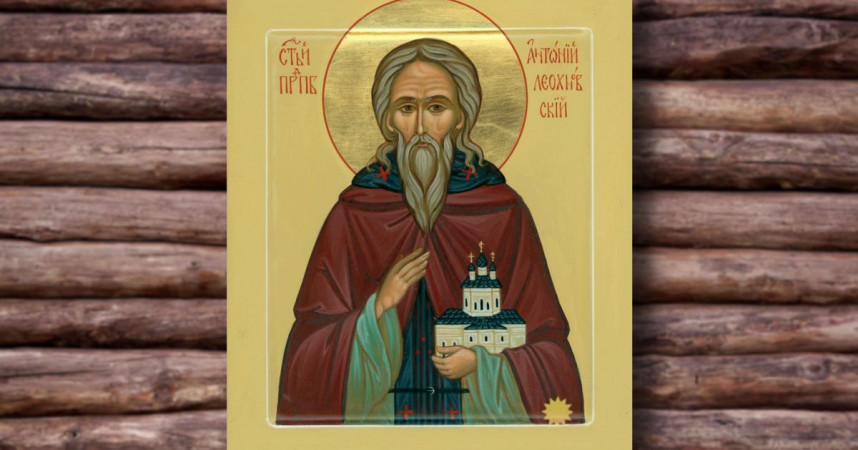
The Church remembers St. Anthony of Leokhnov, Novgorod
30.10.2026, 06:00






-
“I Praise You, Brothers”: The Spiritual Art of Recognizing the Good
Alexey Shirikov
All Authors