St. Stephen was a contemporary and closest companion of St. Sergius of Radonezh. He was born and raised in Kiev, became a monk at the Pechersk Monastery, where he spent his life in strict abstinence, incessant prayer and complete obedience to the elders. For several years, St. Stephen lived in the Kiev Pechersk Monastery, improving more and more in monastic exploits. But the peaceful course of monastic life in Kiev was disrupted by the subordination of the southern part of Russia to the princes of Lithuania, and then to the Polish king. Catholics increased their influence and began to oppress the Orthodox: they took away churches from them and built churches in them, did not allow Orthodox People to hold significant positions, scolded and even beat priests and monks. The persecution of Orthodoxy especially intensified in the middle of the 14th century.
At that time, many monks in Kiev and its environs left their monasteries and retreated into obscure wilds and deserts for feats of fasting and prayer. St. Stephen also left the Kiev Pechersk Lavra and went north to Orthodox Moscow.
Saint Stephen arrived in the capital of the Russian state during the reign of Grand Duke John II (1353-1359), the son of Kalita and the father of St. Dimitri Donskoy (memory of May 19/June 1), who suggested that the ascetic choose any monastery in Moscow for residence. But St. Stephen decided to settle in the desert and went to the northeast, where he chose a place for himself in the forest tract of Makhrishche, 35 versts from the monastery of St. Sergius. Having erected a wooden cross, the ascetic cut down his cell, uprooted the forest around for cultivating the land and began to live there, striving in fasting, prayer and labors. When the holy hermit became known in the vicinity, zealots of piety began to come to him. At first, the Monk Stephen, striving for silence, did not allow them to settle near him, but then he yielded to their requests. No later than 1358, with the blessing of St. Alexy, Metropolitan of Moscow (+ 1378; commemorated on February 12/25), St. Stephen founded the monastery. The brethren built a temple in the name of the Life-Giving Trinity, a refectory and cells, which were surrounded by a fence. St. Alexy ordained St. Stephen to the priesthood and appointed him abbot of the new monastery.
The monastery organized by St. Stephen spread enormously, led by him according to the rules of the hostel. With gentle and quiet instructions, the monk taught the brethren about the ways of salvation, about the deanery of the church and the duties of a monk, reminding them of the words of the Lord: "Whom will I look at, if not at the meek and silent and trembling of My words" (Isa. 66,2). Even more than a word, the abbot taught by example, no different from the brethren in clothes and food, clothed in rags, as if one of the last, taking precedence only in prayer, for he warned everyone in the temple of God and was not inferior to anyone in his labors. Not only monks, but also laypeople flocked to him from the surrounding area for spiritual advice, and St. Sergius of Radonezh, whose Lavra had already appeared in the neighborhood, forty versts from Makhrishcha, visited him for an edifying conversation. But one day the great associate Sergius came to St. Stephen, hiding from him the guilt of his parish – the chagrin from the brethren, which forced him to retire from his monastery for a while.
When they met, they bowed down to the ground, asking each other for prayers and blessings, and together they entered the church for a brief prayer. St. Sergius stayed for several days at the Makhrishch monastery, walking around the desert with him and having spiritual fun about its prosperity. Finally, St. Sergius revealed to him the desire of his heart: "I wish, Father, with the help of God, I could find myself a secluded place where I could be silent. I ask your love to grant me one of your disciples who know the desert places." The Monk Stephen lovingly fulfilled the request of Abba Sergius and, having dismissed his virtuous disciple Simon with him, escorted him to the spring, three versts from the monastery. Later, a chapel was erected at the place of parting of the holy elders, above the spring. Simon, having walked around many deserted places with St. Sergius, pointed out to him a high, beautiful place on the Kirzhachi River. The hermit of Radonezh fell in love with it, and there the monk founded a new monastery in the name of the Annunciation of the Mother of God, where he temporarily settled until the brethren of his original Monastery felt the bitter deprivation and separation from such a pastor and begged him to return, already through the mediation of St. Alexy of Moscow.
Soon Stephen himself was also tempted by the brethren, and he followed the humble example of his interlocutor, St. Sergius. A certain Gregory, who lived near the Trinity Monastery, transferred his land and other property to the monastery, became a monk and became a diligent student of the abbot. The monk soon sent him to St. Alexy, who ordained Gregory to the priesthood and returned him to the monastery. Meanwhile, the annexation of some lands to the monastery of St. Stephen caused irritation to the four Yurkovsky brothers who lived nearby, who were afraid that their estate might go to the monastery. In order to force the monk to leave these places, they threatened to kill him. No amount of admonition from the saint helped. Then the Monk Stephen, leaving the holy monk Elijah in his place, secretly left the monastery together with his beloved disciple Gregory. 60 versts from Vologda, in the ancient Avnezhsky principality, he founded the Trinity Avnezhsky desert. The first tonsured monk of the monastery was the local landowner Konstantin Dmitrievich, who, wishing to imitate the exploits of St. Stephen, distributed one part of his estate to the poor, and donated the other to the new monastery and took monastic vows with the name Cassian (subsequently suffered together with St. Gregory in 1392; their memory on June 15/28). Over time, the fame of the Avnezh monks reached Moscow. The venerable Grand Duke Dimitri Ioannovich Donskoy, having learned about the place of residence of St. Stephen, summoned him to himself, and made a rich contribution to the monastery with liturgical books and other donations. The Monk Stephen, having entrusted his flock to the Monk Gregory, and the cell service to the Monk Cassian, went to the reigning city.
On the way to Moscow, the Monk Stephen visited the Makhrish monastery, where he was joyfully greeted by the brethren, who begged him not to leave them any more and return to them from the capital.
He was graciously received there by St. Alexy, who deeply respected his virtue, and the Grand Duke, a lover of ecclesiastical splendor, who provided the Makhrish monastery with many lands and privileges and ordered St. Stephen to settle in it again.
After returning to the monastery of Makhrishch, the Monk Stephen introduced a cenobitic charter in it and for many years peacefully and wisely ruled the brethren. From time to time he came to talk to the great wonderworker Sergius.
Having reached a great old age, the Monk Stephen handed over the abbacy to the elder Elijah and accepted the great schema. Soon, sensing the approach of his demise, he called a spiritual flock and for the last time taught the brethren spiritual deeds, the fear of God and unceasing memory of death, unfeigned love, abstinence and ultimate renunciation of the world. And having partaken of the Holy Mysteries of Christ, the Monk Stephen surrendered his pure soul to God on July 14th, 1406. The fragrance of his holy life wafted from his holy relics, testifying to his favorable appearance before God. With tears, the brethren buried him in the monastery of the Life-Giving Trinity created by him.
In 1550, during the construction of a new stone church in the name of the Life-Giving Trinity, the relics of St. Stephen were found incorruptible, but left in the new church under a bushel. From the leather paramand found on the Persian relics and embedded in a silver cross, healings followed for those who touched it with faith.
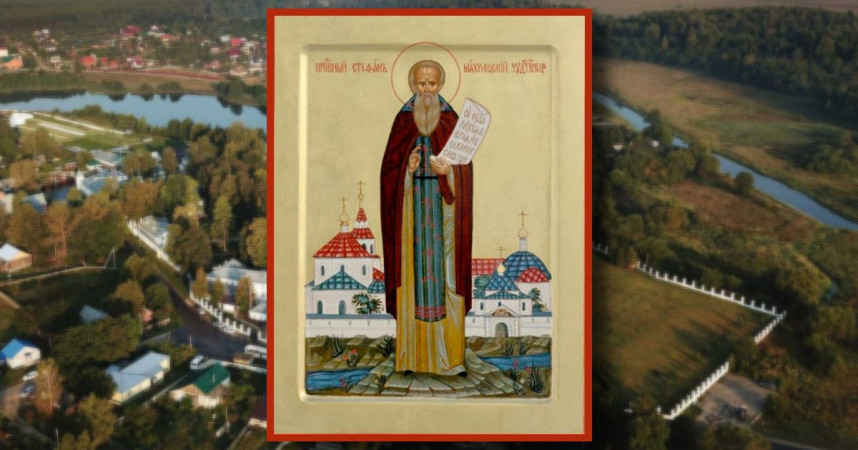
The Church remembers St. Stephen of Mahrishch
27.07.2024, 06:00







-
The True Meaning of a Miracle
Anton Atroshenko
All Authors