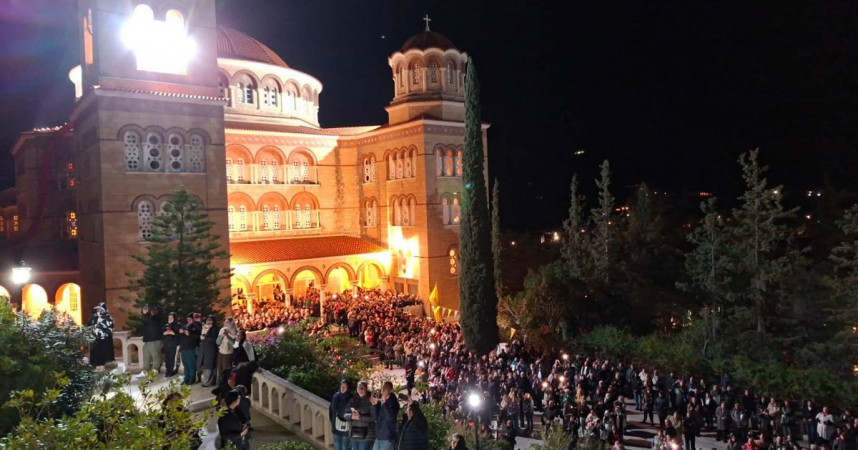
Thousands of Orthodox Christians from Greece and abroad gathered on the Greek island of Aegina on November 9 to commemorate St. Nektarios of Aegina, one of the most widely venerated saints in modern Greece.
The celebrations took place at the Holy Trinity Monastery and the nearby Church of St. Nektarios, drawing pilgrims, local residents, clergy and representatives of various community organizations.
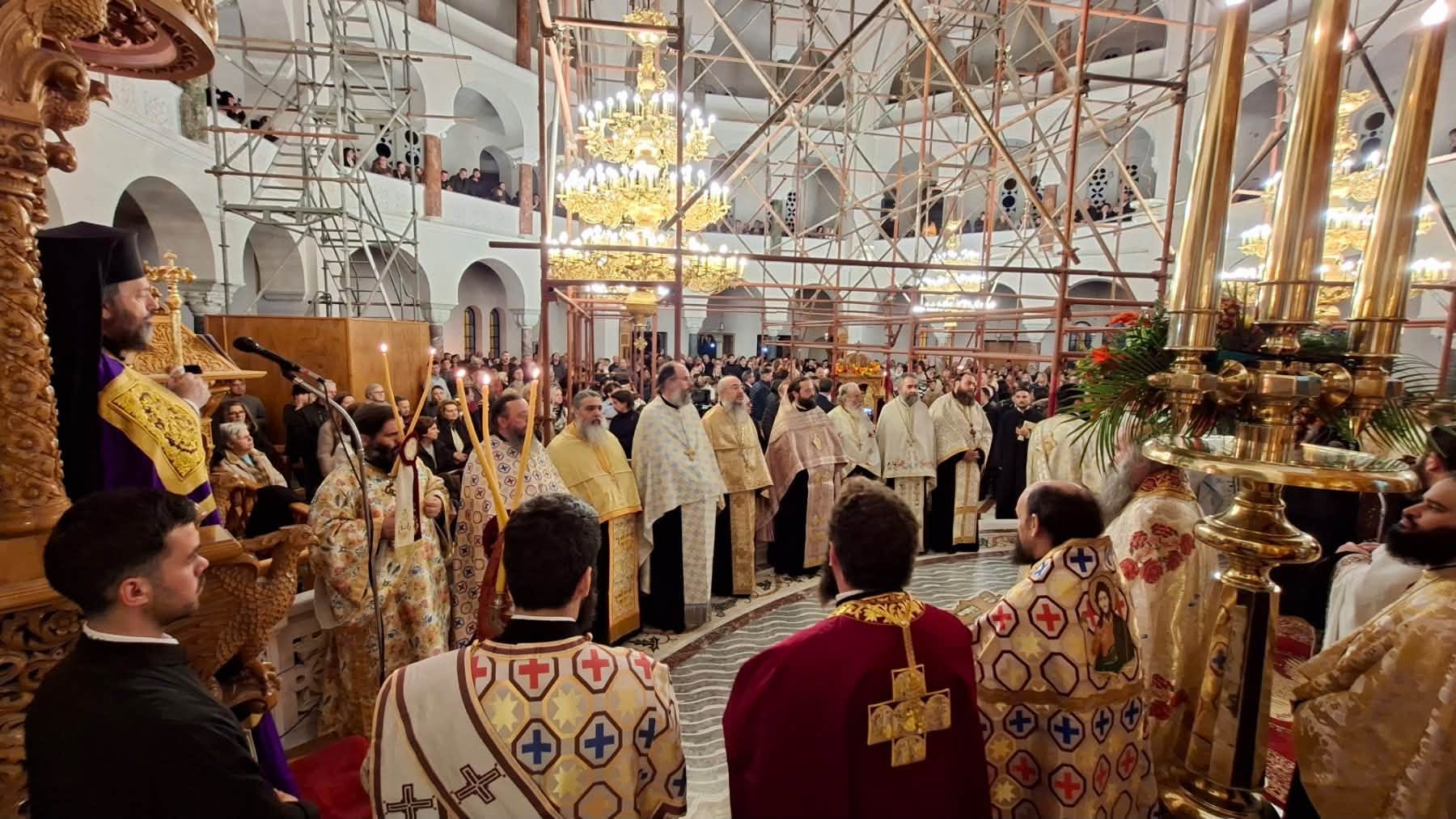
The highlight of the festivities was a solemn Divine Liturgy attended by eight hierarchs representing different church dioceses, including the Patriarchate of Jerusalem. The service was presided over by Metropolitan Athanasios of Ilia and Oleni, according to the Orthodoxia News Agency.
Following the Liturgy, a procession carrying the saint's relics and his holy head — among the island's most treasured religious relics — made its way through the central streets of Aegina to the town's cathedral. Local residents, pilgrims, schoolchildren, members of civic organizations and clergy took part in the procession.
During his sermon, Metropolitan Chrysostomos of Mani highlighted St. Nektarios' humility, modesty and compassion. He noted that although the saint possessed little material wealth, he was rich in spiritual gifts and devoted his life to helping others.
The hierarch urged the faithful not merely to honor the saint through religious observances, but also to follow his example in their everyday lives.
St. Nektarios, born Anastasios Kefalas (1846–1920), was an Orthodox bishop, theologian and educator. He was born in Eastern Thrace, in what is now modern-day Turkey, and later became head of the Rizarios Ecclesiastical School in Athens.
In 1904, he founded the Holy Trinity Monastery for women on Aegina, where he spent the final years of his life.
St. Nektarios became particularly renowned for his charitable work, humility and numerous accounts of miraculous healings attributed to his prayers and intercession. He is widely venerated as a protector of those suffering from illness and life's hardships.
The Ecumenical Patriarchate of Constantinople officially canonized him in 1961, recognizing his enduring spiritual legacy and the devotion he inspired among Orthodox Christians.
Today, his monastery on Aegina remains an important pilgrimage destination, attracting thousands of faithful who come to pray, venerate his relics and seek his intercession.







-
Too Much Freedom?
Alexey Shirikov
All Authors