St. Job of Pochaev lived for about a hundred years, a century filled with prayer, hard work, service to people, and protection of the Orthodox faith.
The future saint was born around 1551 in Galicia, in the Pokut region, into a pious family. His baptismal name was John. As a child, he loved to read the lives of saints and the works of the holy fathers. The images of John the Baptist, John of the Ladder, Sava the Consecrated and John of Damascus became especially close to him.
Already at the age of ten, John made an unusual decision for a child — he left his parents' home and came to the Ugornitsky Transfiguration Monastery. He asked the abbot to accept him into the brotherhood. At the age of twelve, the young man was tonsured a monk with the name Job, in honor of the Old Testament righteous Job the Long—suffering.
From an early age, the main rule of his life was the unity of word and deed. Job did not limit himself to the obedience entrusted to him: he tried to help each of the brethren, and performed every task with meekness and humility. Over time, he was already known far beyond the monastery. People came to him for advice, prayer, and blessings. At the age of thirty, despite his long reluctance to take high office, Job was ordained a priest.
Later, Prince Konstantin Ostrogsky invited the monk to the Holy Cross Monastery in Dubno. Here Job became abbot and managed the monastery for about twenty years. It was a difficult time for the Orthodox Western Russian lands. The monk cared not only about monastic discipline and the spiritual life of the brethren, but also about the enlightenment of people and the preservation of the Orthodox faith.
However, fame weighed on him. Job did not seek fame, but solitude and prayer. Therefore, he left Dubno and came to Pochaev Mountain, hoping to live here as a simple monk. But the brethren of the young monastery asked him to become abbot.
It was with Pochaev that most of the saint's later life turned out to be connected.
Job took care of the construction and economy of the monastery, sought the transfer of lands and lands to him, arranged wells, ponds, gardens and vegetable gardens. At the same time, he did not shy away from the hardest work: he planted trees, grafted them, dug the earth, participated in the establishment of the monastery economy.
The monastery also had to go through a difficult ordeal. After the death of the monastery's benefactor Anna Goyskaya, the new owner of these lands, Andrei Ferley, began to oppress the monks, and in 1623 his people plundered the monastery and stole the miraculous Pochaev icon of the Mother of God. Subsequently, the shrine was returned to the monastery.
But the active abbot remained above all an ascetic. For solitary prayer, he went into a cave. According to the testimony of the author of his life Dositheus, sometimes the monk spent several days there in prayer and fasting. His constant prayer was the words: "Lord Jesus Christ, Son of God, have mercy on me."
Strict with himself, Job was surprisingly forgiving of others. One night, he saw a man who was stealing monastery wheat. The kidnapper expected to be punished, but the monk did not disgrace him. On the contrary, he helped lift the bag onto his shoulder, reminded him of God's commandments and let him go in peace.
This was the measure of his attitude towards a person: demanding of himself and mercy for his neighbor.
St. Job lived for about a hundred years. A week before his death, he, according to legend, predicted the day of his death. On October 28, 1651, according to the old style, he peacefully departed to the Lord.
A few years later, his relics were found incorruptible and transferred to the temple. Veneration of St. Job has become an integral part of the spiritual history of the Pochaev monastery.
The memory of St. Job of Pochaev is celebrated three times a year, including on November 10, the day of his death.
His long life reminds us of a simple and at the same time difficult Christian truth: faith is revealed not only in words, but above all in how a person prays, works, forgives and serves others.
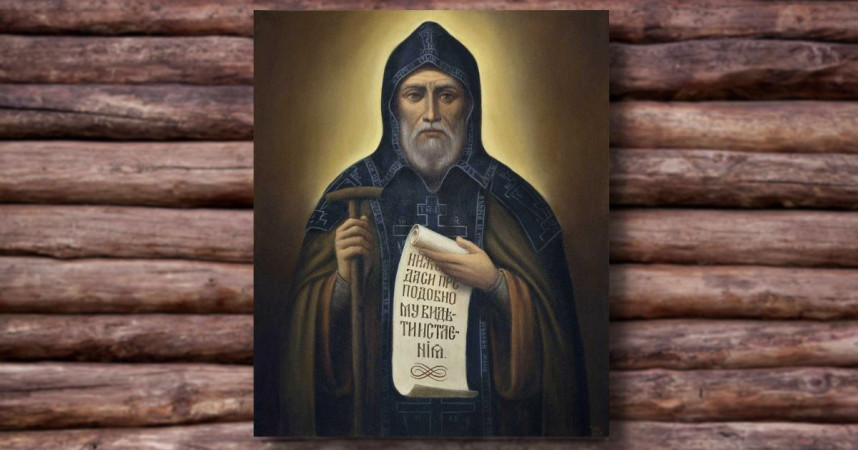
St. Job of Pochaev: a life of prayer and labor
10.11.2026, 06:00






-

Too Much Freedom?
Alexey Shirikov
All Authors