In October 2026, the first collection of the project of the Educational Committee of the Russian Orthodox Church "Memory of the Church. Conversations with witnesses of the life of the Church in the Soviet era." The book includes 13 conversations covering the period from the pre-war years to the end of the Soviet era.
These are the stories of people whose lives and faith came during the years of persecution and trials. They remember how they went to church in secret, how they prayed at home, how they remained faithful to God at school, in the army, and in their family. These memories become a bridge between generations and are addressed to those who inherit their experience today.
Among the heroes of the collection are people of very different positions: bishops, priests, monastics and ordinary laity. The book presents conversations with Metropolitan Kirill of Stavropol and Nevinnomyssk and Metropolitan Sergius (Fomin), who remembers Metropolitan Filaret (Vakhromeev) on the occasion of the 90th anniversary of his birth. Protopresbyter Vladimir Divakov, Secretary of the Patriarch of Moscow and All Russia for the city of Moscow, Archpriest Maxim Kozlov, Chairman of the Educational Committee, Archpriest Vladimir Volgin, Archpriest Nikolai Vazhnov, Archpriest Konstantin Metelnitsky and Archpriest Georgy Gorbachuk, Deputy Chairman of the Synodal Department for Monasteries and Monasticism, Abbess of the Zachatievsky Stavropol Convent in Moscow, Abbess Juliania (Kaleda) shared their memories nun Maria (Murashova), as well as laypeople Mikhail Ivanov and Vera Pasenko. One of the most memorable participants of the project was the oldest respondent, 102—year-old Tatiana Mikhailovna Gracheva.
The geography of the conversations is very wide: from Moscow and St. Petersburg to Barnaul, as well as Belarus and Ukraine. The testimonies from different parts of our country and neighboring countries add up to a complete picture of the church life of the Soviet era.
The staff and students of the theological schools of the Russian Orthodox Church in the territory of the Russian Federation were engaged in the collection of testimonies. The materials were processed by the editorial committee of the Educational Committee. The archive of memoirs of the project participants turned out to be so rich that the first collection contained only a small part of the collected materials.
The publication is important for the preservation of historical memory and the continuity of generations. The book is recommended for students of theological schools, but it will also be of interest to a wider range of readers: anyone who cares about the history of the Church and the fate of people who retained their faith during the years of persecution.
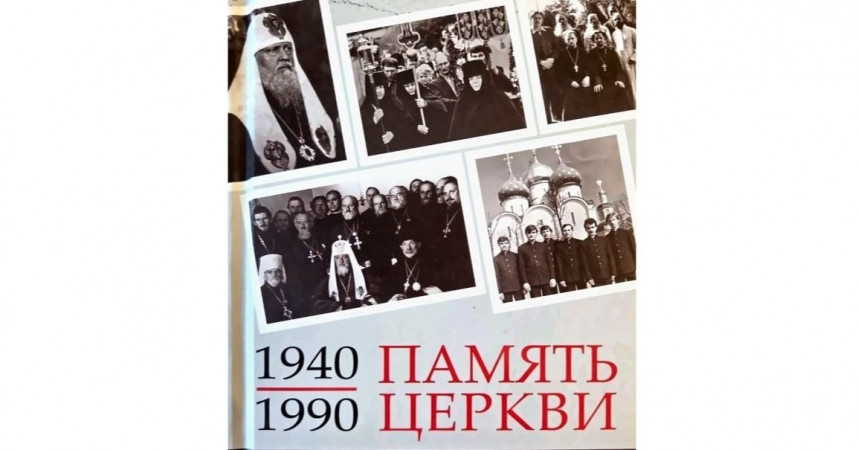
The Educational Committee of the Russian Church presented "The Memory of the Church", the first collection of testimonies about faith in the Soviet era
23.10.2026, 10:00





-
“I Praise You, Brothers”: The Spiritual Art of Recognizing the Good
Alexey Shirikov
All Authors