Blessed Matrona Anemnyasevskaya, in the world Matryona Grigoryevna Belyakova, was born on November 6, 1864 in the village of Anemnyasevo, Kasimov district, Ryazan province, into a poor peasant family.
She grew up to be an ordinary child until the age of seven, but after suffering from smallpox, she lost her eyesight forever. At the age of ten, after being severely beaten by her mother, the girl lost the ability to walk. From that time until the end of her life, she remained bedridden, patiently enduring illness, cold, hardship, and the abuse of her family. Matrona found solace in prayer.
At the age of seventeen, people began to come to her, asking for prayer help. The first, according to the biography, was a fellow villager who suffered from severe back pain. After Matrona's prayer, he was relieved and was able to return to work. The news of this spread to the surrounding villages, and soon dozens, and sometimes hundreds, of people began to come to the ascetic every day.
For more than fifty years, Matrona received visitors, listened to them, comforted them, instructed them, warned them about mistakes, and prayed for healing from illnesses and addictions. She greeted some affectionately, while she severely rebuked others, encouraging them to repent and correct their lives. At the same time, the blessed one emphasized that people are helped not by her own power, but by the grace of God.
Despite her blindness, Matrona knew by heart many prayers, akathists and church hymns. She had a clear, childlike voice, loved to sing spiritual chants, and often read prayers to visitors that suited their circumstances. The ascetic herself said that she remembered everything she heard from kind people with God's help.
Matrona regularly confessed and received communion of the Holy Mysteries of Christ, and strictly observed her fasts. Since the age of seventeen, she had not eaten meat, especially limiting herself to food during church fasts. She deeply revered the clergy, monasticism and the shrines of the Russian land, and spoke with special love about Sarov, Diveev and Jerusalem.
The blessed one's life was spent in a small room in a village house. She was lying in a small four-poster bed. In summer, she was moved to the vestibule, where she often stayed until late autumn, enduring the cold and dampness. However, Matrona usually answered questions about her condition without complaint and thanked even for a little care.
The biography of the ascetic was compiled during her lifetime by the priest Nikolai Pravdolyubov and his brother Vladimir. During the years of persecution of the Church, this manuscript became one of the reasons for their arrest and conviction. Later, the document was discovered in the archives of the state security agencies by Archpriest Sergiy Pravdolyubov.
In 1935, the authorities accused Matrona of interfering with anti-religious policies and collectivization. At a village meeting, it was decided to "remove" it as a "harmful element." The blessed one was taken first to Kasimov, then to Ryazan and Moscow. There is little information about the last period of her life. It is assumed that she was imprisoned for some time, and then was placed in a home for the elderly and seriously ill.
Blessed Matrona died on July 29, 1936, of heart failure at the Radishchev Chronicle House in Moscow. The likely place of her burial is considered to be the old Vladykinskoye cemetery.
On April 22, 1999, Matrona Anemnyasevskaya was glorified in Kasimov as a locally venerated saint of the Ryazan diocese. Subsequently, she was canonized as New Martyrs and confessors of Russia for general church veneration.
The feat of Blessed Matrona Anemnyasevskaya became an example of extraordinary patience, prayer, mercy and fidelity to Christ during the years of severe trials and persecution of the Church.
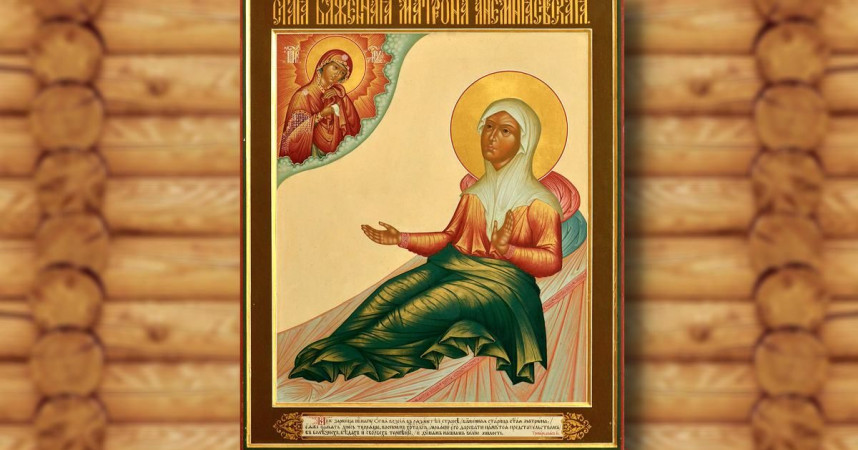
The Church remembers Blessed Matrona Anemnyasevskaya
29.07.2026, 06:00


-

Invisible Wings
Yana Kapaeva
All Authors