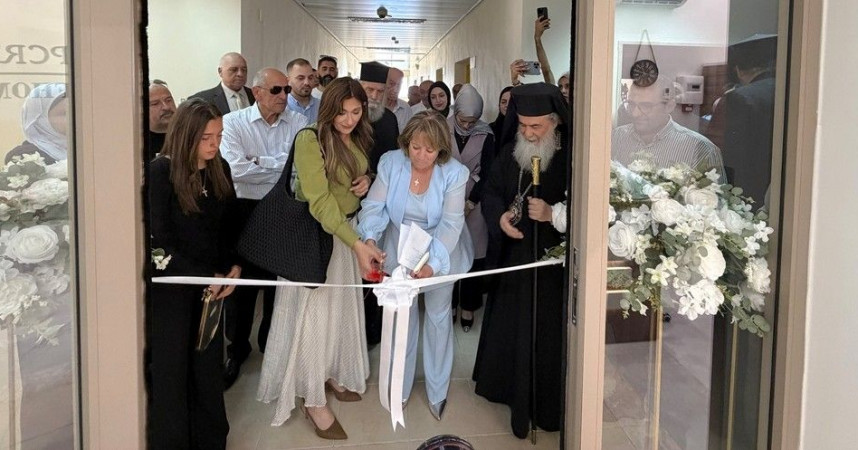
Jerusalem Patriarch Theophilos III has visited the Four Homes of Mercy charitable medical center in Bethany, where he blessed newly established facilities for infants with incurable illnesses and praised the institution’s long-standing humanitarian mission.
According to a statement from the Jerusalem Patriarchate, the Patriarch’s visit included a tour of the center and the consecration of a new ward dedicated to newborns requiring specialized, lifelong medical care.
Theophilos III expressed gratitude to the staff for their dedication to patients in need of continuous treatment and support, describing their work as an example of selfless service.
He was accompanied during the visit by senior hierarchs of the Jerusalem Orthodox Church, clergy members, representatives of the foundation, the mayor of Bethany (Al-Eizariya), and officials from the Palestinian Authority.
Bethany, located east of Jerusalem in the Palestinian territories, holds deep significance in Christian tradition. According to the New Testament, it was the home of Lazarus and his sisters Mary and Martha, and the site of the miracle in which Jesus is said to have raised Lazarus from the dead.
The Four Homes of Mercy center is the oldest and largest charitable institution of its kind in the Palestinian territories. It was founded in 1940 by Palestinian Orthodox Christian philanthropist Katherine George Siksik during the British Mandate period, initially operating as a small two-bed shelter for the sick and disabled.
Over time, the organization expanded into a major long-term care and rehabilitation network, now operating facilities in both Jerusalem and Bethany. It provides round-the-clock care for children and adults suffering from severe neurological disorders, congenital conditions, and long-term disabilities caused by stroke or injury. Many residents remain in the facility for decades due to the need for permanent medical supervision.
Today, the center cares for dozens of patients of various ages. Families are required to cover only a small portion of the cost of care, with the remainder supported through charitable funding. In addition to medical services, the institution offers rehabilitation programs, psychological support, social integration activities, and training for relatives who care for patients at home.
The organization has continued its operations through periods of regional conflict, including multiple wars in the region, at times providing shelter for displaced people and maintaining care for patients despite shortages of supplies, water disruptions, and security risks.
The Jerusalem Patriarchate highlighted the center as one of the most important social ministries supported by the Orthodox Church in the Holy Land for more than eight decades, emphasizing its continued role in serving some of the region’s most vulnerable communities.


-

What Should We Remember?
Olga Kutanina
All Authors