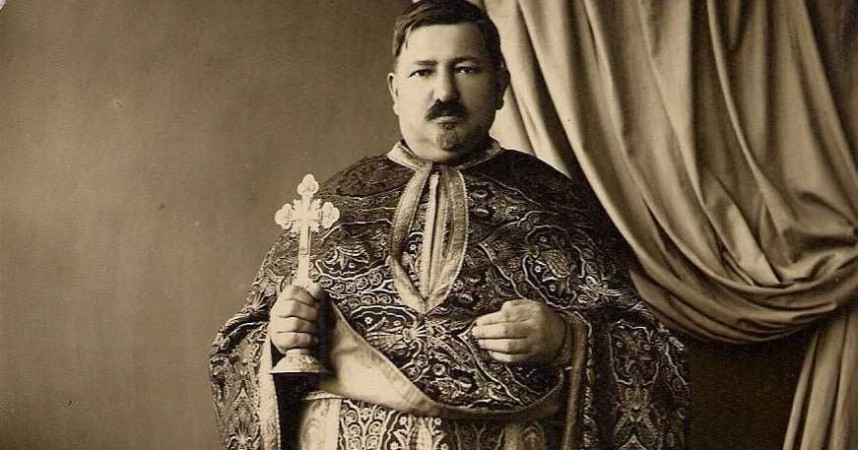
Romania's Chamber of Deputies has passed legislation officially recognizing Orthodox Archpriest Aurel Munteanu as a hero and martyr of the Romanian people while establishing an annual Day of the Romanian Martyrs of Huedin to commemorate victims of the violence that followed the territorial changes of 1940.
According to the Romanian Orthodox Church, the bill was approved by an overwhelming majority, with 276 deputies voting in favor and one against. The legislation now awaits the signature of Romania's president before it becomes law.
The new commemorative day will be observed each year on Sept. 10, marking the anniversary of Munteanu's death.
Aurel Munteanu (1882–1940) was a priest of the Romanian Orthodox Church and one of the leading figures of the Romanian community in Transylvania during the first half of the 20th century. After Transylvania became part of Romania following World War I, he led the Orthodox deanery in the northwestern town of Huedin and became known for his contributions to both religious and civic life.
In addition to helping establish an Orthodox cathedral, Munteanu promoted education, published cultural journals, served in local government, and was elected to the first parliament of Greater Romania.
The legislation focuses on the events of September 1940, which followed the Second Vienna Award, when Nazi Germany and Fascist Italy compelled Romania to cede Northern Transylvania to Hungary, then governed by Regent Miklós Horthy, an ally of Germany.
After Hungarian forces and civil authorities entered the region, Romanian historians say members of the Romanian population were subjected to persecution and acts of violence during the first weeks of the new administration.
According to historical accounts cited in the legislation, Munteanu was arrested in Huedin on Sept. 10, 1940, tortured, and killed by supporters of the Horthy regime. Romanian gendarme Gheorghe Nicula and other ethnic Romanians also lost their lives during the violence.
The newly established remembrance day is dedicated to these events and to the Romanian victims of September 1940.
Under the law, state institutions, local authorities, educational establishments, and cultural organizations will be able to organize annual memorial ceremonies, academic conferences, and educational programs commemorating those who died during the period.
Archpriest Dan Lupuțan, dean of Huedin, described the legislation as "an act of historical justice." He said Munteanu had made lasting contributions to the Orthodox Church, education, and public life in Transylvania, and that recognizing him as a national hero honors a man who devoted his life to both the Church and the Romanian people.
Huedin, located about 50 kilometers (31 miles) west of Cluj-Napoca in the historic region of Transylvania, was among the areas affected by the territorial dispute between Romania and Hungary during World War II. Northern Transylvania remained under Hungarian administration for nearly four years before being returned to Romania in 1945 following the end of the war.
Munteanu's life and death continue to occupy an important place in Romania's historical memory, where he is honored as one of the Orthodox clergy who perished during the ethnic violence that accompanied the shifting borders of wartime Eastern Europe.


-

What Should We Remember?
Olga Kutanina
All Authors