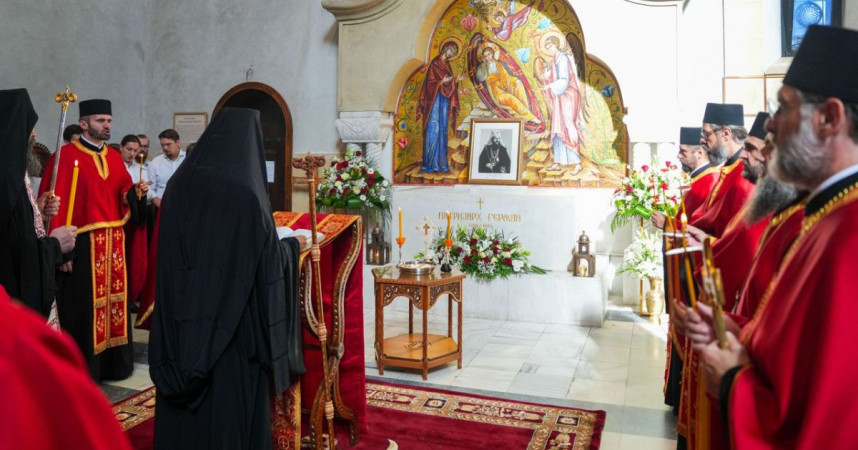
Serbian Patriarch Porfirije celebrated a memorial service for Patriarch German at the Church of St. Mark the Apostle and Evangelist in Belgrade, where the former head of the Serbian Orthodox Church is buried.
The service was held on August 27, marking the 35th anniversary of Patriarch German’s death, the Serbian Orthodox Church reported. Bishop Ilarion of Novobrd, Patriarch Porfirije’s vicar, Archimandrite Nektarije, secretary of the Holy Synod, the church’s clergy, and numerous worshippers took part in the service.
Speaking about his predecessor, Patriarch Porfirije recalled that German led the Serbian Orthodox Church during a period of severe restrictions on religious life in socialist Yugoslavia.
“Patriarch German lived in times that were, to put it mildly, troubled and difficult,” Porfirije said. He added that German was sustained by humility and faith, placing “all his hope in the Lord.”
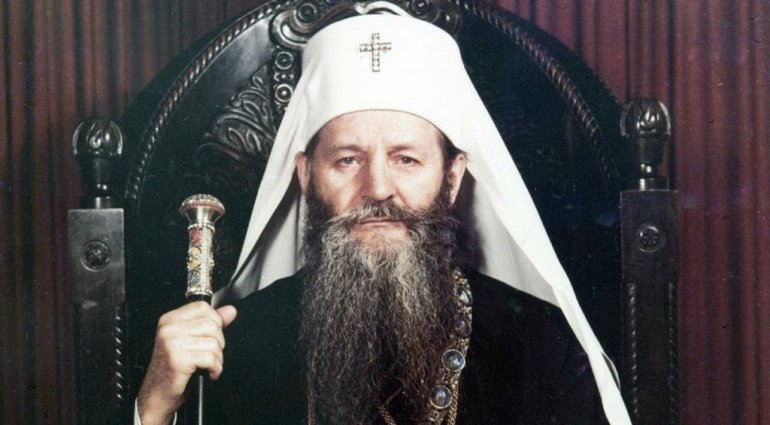
Patriarch German, whose secular name was Hranislav Đorić, was born in 1899 in the Serbian settlement of Jošanička Banja. After completing his theological education and serving as a priest, he became a monk at Studenica Monastery, taking the name German. He was consecrated a bishop in 1951 and elected Patriarch of Serbia in 1958.
He remained on the patriarchal throne for more than three decades, one of the longest periods in the history of the Serbian Orthodox Church. During his tenure, religious activity in Yugoslavia faced significant state restrictions.
Under Patriarch German, theological education and church publishing expanded. The Church opened and strengthened theological institutions and established new dioceses. German also emphasized the importance of combining theological knowledge with prayer and spiritual life.
A defining episode of his ministry was his role in the construction of the Church of Saint Sava in Belgrade. At a time when construction was effectively prohibited, Patriarch German repeatedly appealed to the authorities for permission to resume the work.
According to Patriarch Porfirije, the Church submitted 88 such appeals—and received 88 refusals. Permission to restart construction was finally granted in 1984. In May 1985, a liturgy was celebrated at the site, and a charter was laid to mark the beginning of a new phase of construction.
Today, the Church of Saint Sava is one of the main symbols of Serbian Orthodoxy and one of the world’s largest Orthodox churches. Porfirije described it as one of the enduring testimonies to Patriarch German’s faith and perseverance.
“He knew that God works miracles where there are faith and hope,” the Serbian patriarch said.
Patriarch German died on August 27, 1991, and was buried at the Church of St. Mark in Belgrade. To mark the anniversary of his death, the Serbian television channel Hram produced a documentary about his life and service during the period of state atheism.




-
Woe to You, Actors
Alexey Shirikov
All Authors