Saint Tikhon (in the world Timothy) was born in 1724 into the family of the poorest clerk in the village of Korotsk (Valdai county) and soon after birth lost his parent. His childhood and adolescence were spent in the midst of terrible poverty: sometimes he had to work all day for the inhabitants of his native village for a piece of bread. He narrowly avoided being recruited as a soldier and entered the Novgorod Seminary, where he later became a mentor. Some special circumstances (a miraculous escape from mortal danger and some visions) disposed him to accept monasticism. In 1758 He was tonsured a monk with the name Tikhon. The following year, he was appointed rector of the Tver Seminary, where he lectured on moral theology. Moreover, he read them in Russian, and not in Latin, as was customary before him. Besides the students, many outsiders came to his lectures.
In 1761, at the age of 37, Hieromonk Tikhon, on explicit instructions from above, was elected bishop. For about two years he was a vicar in Novgorod and for about four (1763-1767) he independently headed the episcopal see in Voronezh. Throughout his episcopate, he diligently preached and encouraged his subordinate priests to do the same. Since the time of paganism, a holiday in honor of Yarila has been observed in Voronezh, combined with many outrages. One day, the saint unexpectedly appeared on the people's Square in the midst of the merriment and began to denounce the rioters. His word had such an effect that the celebration was never resumed.
Meanwhile, the intense labors upset the health of St. Tikhon. He requested dismissal from his post and spent the last 16 years (1767-1783) of his life in retirement at the Zadonsky monastery. All his time, with the exception of 4-5 hours of rest, was devoted to prayer, reading the word of God, charity, and writing spiritual essays. He came to the temple every day. At home, he often fell to his knees and, bursting into tears, like the most grievous sinner, called out: "Lord, have mercy. Lord, have mercy!" He certainly read several chapters of the Holy Scriptures every day (especially the prophet Isaiah), and he never traveled without a small Psalter. His entire 400-ruble pension went to charity, and everything he received as a gift from friends was also sent here. Often in simple monastic clothes, he went to the nearest town (Yelets) and visited the prisoners of the local prison. He comforted them, encouraged them to repent, and then gave them alms. He himself was extremely non-possessive, living in the midst of the simplest and poorest surroundings. When he sat down at a meager table, he often thought of the poor who did not have food like him and began to reproach himself for having, according to his reasoning, done little for the Church. Then bitter tears began to flow from his eyes. By nature hot-tempered and short-tempered, he was surprisingly meek and gentle. He bowed to the ground to the cell attendant, asking for forgiveness for any word that seemed offensive to him, and always tried to pay with kindness when someone insulted him in any way. Once, at an acquaintance's house, he entered into conversation with a Voltairean nobleman and meekly, but so strongly, refuted the atheist in everything that the proud man could not stand it and, forgetting himself, slapped the saint on the cheek. Saint Tikhon threw himself at his feet and began to ask for forgiveness, which irritated him. This humility of the saint had such an effect on the insolent offender that he converted to the Orthodox faith and later became a good Christian.
Saint Tikhon possessed the gift of epiphany and performing miracles, reading the minds of his interlocutors. In 1778, when Emperor Alexander I was born, the saint predicted many events of his reign, and in particular that Russia would be saved and the invader (Napoleon) would perish. "The Lord God listened to him on many occasions," wrote the cell attendant of St. Tikhon. The saint was especially fond of conversing with the common people, comforting them in their plight, and helping those who were ruined. Children from the monastery settlement visited him. He taught them prayer, and after the conversation He gave them money. The blessed death of St. Tikhon followed on August 13, 1783. 63 years later, his incorruptible relics were discovered, and in 1861 he was canonized. Among the written works of St. Tikhon of Zadonsk, a collection of short teachings, full of examples from life, called "Spiritual treasure, gathered from the world" is particularly popular.
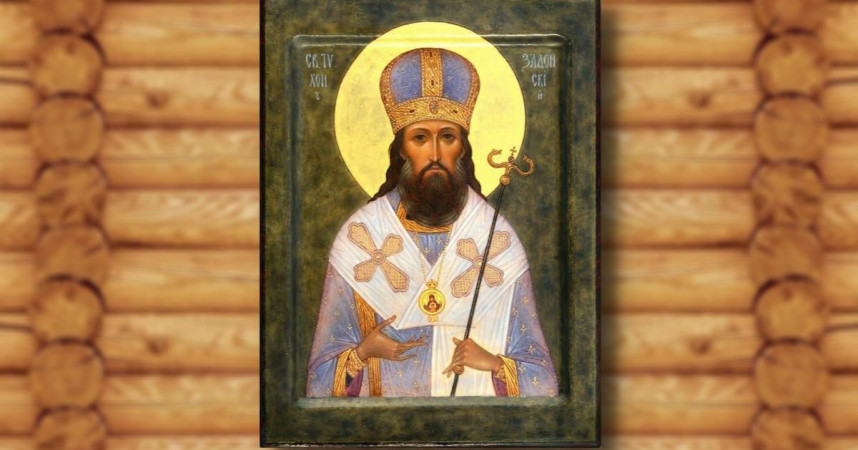
The Church remembers the life of St. Tikhon of Zadonsk
26.08.2026, 06:00





-

Woe to You, Actors
Alexey Shirikov
All Authors